Currently playing: Nox Archaist

Showing posts with label Review. Show all posts

January 2, 2013

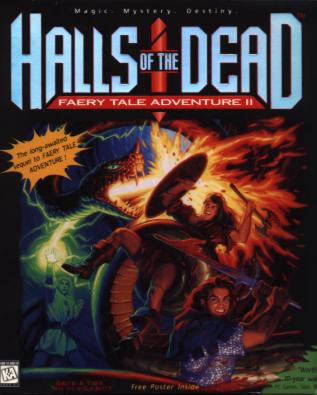
Faery Tale Adventure II - Halls of the dead - Review


Game reviewed: Faery Tale Adventure II - Halls of the dead
Publisher: Encore, inc.
Designed: The Dreamers Guild
Released: 1997
Formats: Pc
Difficulty: 5/10
Est. Playing time: 15 hours

As almost every game I have revisited, they start out very fun and you get addicted for some hours. All your sparetime is invested to play the choosen game. For some games that lasts well into over half the game and for some very few even right to the end. But for some, the glory fades after just a few couple of hours. Faery Tale II started out well but the sluggish and slow movement, the terrible pathfinding and the poor NPC  implementation and lack of directions or quests finally brought this game to a halt for me. 

Sure, If I am having nothing else to do and the time to spare, I could drag on for some more hours with this game and I would probably have my highlights here and there but in total I feel this game is a timesucker, and an escapism not worth the effort really. 

Gameworld & Story
There are some pages in the beginning of the manual telling us about some struggle between chaos and order. It ends with the three steads that fetches the brothers to this world to set the balance straight again. Actually, I don´t care about background information in manuals that have no real effect in the game. It is so boring to read when you just want to play the game. Sorry! I might have missed some hints here but I doubt it. I give half a point in bonus for ingame lore that shows up here and there. 

Rating: 1.5

Economy
I have only visited two towns and my conclusions are that the only thing of interests in these are the shops. You have the armourer, weaponsmith and peddlar and if you are lucky someone who could sell magical potions or scrolls. They are expensive and you cannot afford anything but the cheapest when you start out. You will definetely search and take every spare coin you could find anywhere in the beginning. One way of quickly boosting your equipment and money is by stealing everything from every house. 

In my game it didn´t take many hours before I had got the same equipment and weapons from looted enemies than what I could buy as the most expensive items in the starting town. Then I plundered the castle that gave me a lot of more coins and had nowhere to spend them. Not even in the second town did I find better weapons or armours. One place to spend them that definetely will suck up your coins is to give them to skill trainers. They are hugely expensive but I never bothered to train any skills since my feeling was that they where increasing quite steadily anyway through all the fights. 

There is quite a huge selection of weapons, armours and miscellaneous items in the game (most of the latter seems useless tough). Each type comes in different qualities determined by the metal it is forged in. Mithril would be better than bronze or steel for example.

Perhaps any of the other few cities on the continent would have a broader selection of items to buy from. I did however, not find anywhere to spend my close to 10.000 gold coins. Even healing potions and mana potions are not worth buying since you will find plenty of them.
Rating: 2.5

NPC & Interactions

There are hundreds of NPC:s in the game. Many with their own unique names. Unfortunately, most of them responds with the exactly same phrases. After awhile I got tired to even try to talk to everyone when there always where slim chances they would say anything interesting. I have not have any dialogue options unless in direct trade with an NPC. 

As I´ve said in my playthrough, the interface to communicate with NPC:s is terrible. You click on icons representing ideas you wich to communicate to the NPCs. First you click on the icon idea then on the NPC, that is if the NPC haven´t already walked off the screen! Then you have to repeat this for several Ideas to be sure you don´t miss out something, even tough you know there is a 90 % chance you will learn nothing.
Rating: 2

Monster, tactics & combat system
This part is pretty easy to rate. There is no tactics at all you yourself could use except clicking on your foes time and time again and watch out so that you don´t unintentionally click on one of your other brothers which then will be your active character. The only small part you could control is when you want a brother to disengage from fight or decide when you should use your spells. 

There are quite many different types of monsters but since you don´t see the damage dealt from them it is hard to distinguish them from one another. Some monsters could stun you and engulf you, some could attack from a range but most will go melee with you. The combat system seems to be based solely on your brawl skill in combination with your choosen weapon skill and agility. All is done automatically. 

The system is more advanced than in the first Faery tale but not by much. 
Rating: 1.5

Magic System
There is a skill called spellcraft and everyone has it. You must buy or find scrolls with spells on them to learn them. Once learnt you will alwasy be able to cast them as long as you have enough mana. Each spell belongs to one of several different schools. Your mana pool is divided between these schools which means you can cast a certain number for green spells and still have full mana left for - say - red spells. Each time you  cast a spell you have a chance of increasing your spellcraft skill as well as increasing the mana pool for that spell school. It is quite original in fact and works pretty ok. 

Since healing spells was the ones I most used my spell school of that color (green) also housed my largest mana pool. You regain mana points by time but you will also find frequent mana potions of different colors.

The spells in the game seems varied on the outside. I think direct attack spells actually does quite an amount of damage and if you are low on hitpoints they could often turn a battle in your favor.
Rating: 3

Character generation & development
There are no experience points or levels in the character development process. Each skill and attribute increases automatically as long as you are using it or taking part in actions like combat. In combat, most common is that your health increases, followed by skills in brawl, sword, agility and shield. You have no control over that except you could choose which character will be a melee fighter and which one would serve as a spellcaster. 

I have to admit that I like this system, even tough you cannot control it. It makes sense. But since you lack the control the score in this part can´t be high enough. There is only one way to affect your development in your skills and that is by finding and pay for trainers.
Rating: 2

Map design


The overland map is wonderful and opens up a totally free world to explore in every direction. The underground locations could span in any direction for many screens and contain underground streams, lavas and other places of interest. It is not possible to know the boundaries of the underground maps beforehand and they could span over several levels. That is a strong advantage. You never feel the boundaries of the game engine.
Rating: 4

Manual
I found the manual as one long word document and text only. I cannot judge the disposition or the illustrations of the original manual. The manual itself explains things fairly well but is nothing special.
Rating: 3

Graphics, sound and interface
Faery Tale 2 have quite nice 2D-graphics, including buildings, interiors, monsters and layout in general. The biggest complaint I have with it is that it is slow. Very slow. If the brothers would have been more responisive to mouse clicks and the screen would have scrolled more smoothly and faster this game would almost gain half a point in gameplay. Still, having said that, the graphics aren´t that much superior to the first Faery Tale from 1986. Sure it is better but not 10 years better that holds the titles apart.

The music in the game is a major dissappointment. After the orginal Faery Tales wonderfully and catchy music I was grossly dissappointed to hear poor soundblaster tunes, far inferior to the original amiga soundchips. The only thing worth mentioning is digitized speech in dialogues and some nice environemental effects like from water and such things.

The interface is unique but the decisions made for how to interact with NPC:s is a major breakdown of the whole interface in my eyes. It is easy to shift between the three brothers but their skills, spells and ideas are shown in a poorly designed way. If I wouln´t have read the manual I would not understand how to shift between them in an easy way.
Rating: 2

Gameplay
 I had fun with this game in the beginning. The whole world is accessible to you from the very beginning and you can go anywhere. To gather more items, better armours and weapons is as fun as always, but after awhile one actually want to have som clues or hints of where to go and why. There are a few lore books spread out here and there but they speak about small tales or describe particular events and doesn´t actually direct you anywhere.

Steering and control is hard in the beginning until you get the grips of things. It then becomes easier but the controls are still cumbersome to use. The world is nicely drawn and hides a lot of interesting places but the lack of interesting NPC:s or dialogues makes you feel quite alone after awhile.

This game could have been so much better if they fix the slowness, and completed the game with more content regarding NPCs as well as give some better directions. Relatively speaking, the first Faery Tale is far superior since it offers basically the same thing (albeit not as rich) but was done 10 years earlier.

If you have a lot of spare time and patience I do recommend this game though because somewhere down this road you will be rewarded. For me, I am moving on to another game.
Rating: 3


Section
Rating
Gameworld & Story
1.5
Economy
2.5
NPC & Interactions
2
Monsters, tactics & combat system
1.5
Magic system
3
Character generation & development
2
Map design
4
Manual
3
Graphics, Sound and Interface
2
Summary CRPG value
21.5


Gameplay
3

January 24, 2012

Dark heart of Uukrul - Review

It is time to review Dark Heart of Uukrul while it is still fresh in my memory. I have not the patience to complete the game but think that my 25 hours or so ploughed into the game is well enough to give it a fair rating. I do not like to leave it unfinished but I am realistic enough to realize that I must play for real enjoyment and that my limited time does not allow me to put limitless amounts of hours into a game just for the feeling of completing it.  

How did I came across the game in the first place ? Well, since I am an avid follower of CRPGAddicts blog, I checked his master game list to get hints of RPGs I´ve not played and that looked interesting. This was such an anonymous game that I just had to check it out. It turned out it sucked dozens of hours from game time otherwise set for Skyrim.

I must say that I appreciate these turn-based RPGs tremendously. When playing you don´t need to focus your whole attention to the game. You could take steps in your own time and be interrupted without spoiling anyting. If playing a modern first-person RPG like Skyrim or Oblivion you must have one hand on the mouse and the other on the keyboard and can´t let yourself be disturbed. That´s what I like about these old gems.

Gameworld and Story
The positive thing is that the game confines itself to a town and a specific scenario. The city is ruled by an evil being and you have got to get rid of him somehow. There is no mention of the world outside of this town because that is totally irrelevant for the game at hand. At the start you don´t know much about the story that will be unfolded later on. I personally like to discover those things piece by piece. The story is quite elaborate. There are a reason for how the state are in the town and piece by piece you are fed with it. While this part is not very elaborated it is in par with Bards Tale or Dragon Wars. Simplicity has its strongpoints but also leaves a lot of thoughts about the things outside the specific scenario

Quite often you get descriptions for rooms you enter or other atmosphere inspiring information. Compared to the Bard´s Tale series, this game is much better in that respect. It is more like Dragon Wars which also had some places with elaborate story texts.
Rating: 2.5


Economy
Economy in the game works very well. With that I mean that you always are on the hunt for more gold because even still in the middle levels you need all the gold you can get. Items are expensive, weapons get broken and armour rusted by enemies. You also need constant food rations which costs money. The balance is very good. I´ve not been totally without gold but never have I had enough to buy what I want. I always have to prioritize which person would get his armour or weapon upgraded. You have quite a lot of items to buy but there are only one shop that I have discovered and you never find items you don´t see in the shops inventory which means there are few surprises out there.
Rating: 3.5

NPC and Interactions
NPC:s are not this games' strong point. There are very few NPC:s and most of them don´t offer any dialogue options although you might get hints of the story or your quest. What does outweight the low options of interactions in NPC meetings, are the action related interactions you are given. You could come upon a lever, pit or closed door and be given at least four different ways of using it. That is unusual for this kind of game at this period in time and gives it credit. The only other people you meet which are not hostile (and therefore called monsters below) are the shopkeepers, temple priests, mages etc.

If you love the colorful NPC:s from SSI Goldbox games in Forgotten Realms or Dragonlance this game is not for you. Interactions with the environment however is not too uncommon.
Rating: 2


Monsters and Tactics
The first time I entered combat I thought this must be a clone of Demon´s Winter. Everything is almost identical. But the graphics here is better. You are met with a close-up view of the monster before the actual combat begin and the tactical map is actually better here. There are more details in the monsters shown and the tactical layout is more representative of the actual hex in which the combat occurred. You also have several exits points if there where several doors around you, not only one exit. You could move diagonally but not attack diagonally.

Monsters comes of several different types. They are humans, humanoids, undeads, animals and pure monsters and they have different types of attacks. Some of the can stun or paralyse you. Some can rust your armour or drain your experience. Some even steals your items and flee!

Your human and humanoid enemies could flee combat which is quite seldom seen in RPGs at all. After combat you have the chance to gain gold and items. Experience is given according of who did the most damage and if you have met this kind of opponent before, for instance, if it´s the first time you encounter skeletons you will receive more experience. That system is quite advanced for its time as well.

There is however no ranged weapons at all in the game. It would easily have been useful in this kind of tactical combat.

Although the combat is far from as good as in the SSI goldbox games, it is good enough to score above average here. There are only two things that detain from higher score and that is the lack of ranged combat, backstab or other flanking bonuses and poor enemy A.I. You could often outmanouvre the enemy to easily use your movement and attack phase to a much better degree than the A.I is capable of. He does not go for the weakest character but for the first he can hit.

Autocombat works quite ok but is recommended only if you are certain of the outcome and you know there are no dangerous opponents. Since you don´t get any report after the combat if - for example - a weapon was broken or an armour rusted, you could be very unlucky to let the A.I fight for you. It could cost a lot of money so it is not always worth it.
Rating: 4


Map design
The maps are of irregular sizes and formations which is good since it adds to variety. But it also makes them very hard to map out for hand. Fortunately you have built in automap. It works but when you have to travel up and down through several levels or teleport yourself it is very difficult to get a good overview of the areas or how they are connected to each other. It does however add to the immersion that you don´t know how big this game really is. In other games of the time, maps are often drawn from fixed cubic sizes of 32*32 or 16*16 hexes. Not here.

In the beginning the maps looks very irregular but then they are also supposed to symbolise caves. Later on in the game they are more intelligently built. It is impossible to get a feeling for how the maps are drawn if you take into accordance the few descriptions of the environment here and there. For example, the text could speak of an orcish area, a throne room or whatever. But when you look on the map you can in no way see the rooms are where they are in a logical or intelligent way. That is not uncommon for other games at the time so it will not weigh down DhoU either.
Rating: 3


Graphics, sound and interface
The dungeon graphics in this game cannot be simpler. The same color and lines depicts everything you see. From town squares to caves. It is functional but even Commodore 64 had better graphics in Bard´s Tale released several years earlier. However, the still images of the NPC and monsters you meet are well drawn and add to the atmophere. The interface is totally keyboard driven and it doesn´t take long to learn. You move quick through the dungeons and combat. Inventory and its interfaces is also quite self-explanatory with clear pictures of items and weapons.

Compared to Demon´s Winter, this game has better interface.

Sound is unfortunately non-existent in the game (or at least in my DosBox setup).
Rating: 2


Manual
The manual consists of 75 pages and is well written. The only thing I don´t like is the description of the spells and particularly the priest spells which are described as rhymes. It adds nothing to the immersion, only frustration.


Gameplay
I was immediately hooked by this game. It was easy to get into and presented a very balanced start. The combats are varied and sometimes you do need to use certain spells or tactics to win, although your paladin and warrior are the one who totally own the battlefield. It is not until the mid-game that you have spells that become quite useful in combat as well as healing the group. In the beginning you have few uses of the mage and almost none for the priest.

The game quickly becomes a challenge. You need rations to survive and that costs money. Money often is only attainable by slaying monsters. You also need to constant buy better armours and weapons to keep up with the stiffening opposition after every new Sanctuary found. The game lets you save everywhere but it also save automatically in the beginning of each combat so if you are unlucky of being trapped in a too difficult fight you have few chances of surviving it since a reload puts you back into the same fight. You could only hope to flee or to reload to a backup game which you have stored in a Sanctuary. That is hardcore. I took backup saves of the directory all the time so I wouldn´t loose too much by making my mistakes.

Besides, you always have to get back to a Sanctuary or markeplace to heal, gain levels, sell/buy items or rations etc. The problem is the long trek through random encounters on the way back and on the way to the point you where. Sure, that is the same as in all the other games of the time but it won´t make it less frustrating at times. If only the mage could have some freely laid teleport location.

This game is hard. You really have to slowly progress in the dungeons and build up your characters before you can venture further on. Up until level 4 it is very tough. Between level 5 to 6 you realise there might be a chance for you after all and after level 7 combats are beginning to become the second hardest part, the puzzles appearing begin to be the tough part. There are no way I have found out through spells or otherwise that lets you teleport back to a specific location. You have to use the fixed teleporters for that.

There are fights that poisons or cripples you and it takes a lot of valuable money to repair broken items. But perseverance pays itself because somewhere in the middle-game when you pass level 6 things are gradually becoming easier, the fights begin to lessen. Instead the puzzle solving part of the game begins to appear.

One more thing that irritated me a lot is the lack of per-spelled spellnames (got it ?). You have to manually write the cryptic name of each spell or prayer cast and I find it difficult to remember more than a few of them at the same time which means I have to look them up every time I need to use a more uncommon spell. The result is that I am too lazy to do that and miss out on things.

For me personally I came to the conclusion at this point that this game will take a lot of more efforts to break. I had already spent 25 hours of my holiday on it. Now work where about to start again and I was not looking forward to be locked into this puzzle solving thing during January. My patience is not large when I have limited time and so I decided to stop this game for now. I have done enough deep-diving into it to properly assess it I believe. If I had the time I would surely play it to the end but that is more to satisfy my desire to complete things started rather than fully enjoying it all the way.

Regardless of my decision to move on into the CRPG djungle, this game comes highly recommended for hardcore gamers who wants a challenge of the old school and could spare a minimum of 50 hours.
Rating: 4


Recommended links:


January 22, 2012

Prophecy of the Shadow - Review

This is my fastest completion and playtime so far. In less than two weeks I completed the game. If I would guess, I would say I spent around 20 hours with this game. Normally - If I would have bought this game at the time and had unlimited playing time - I would have thought it was too short. Now I am just grateful to be able to enjoy and complete the game in a reasonable amount of time.

This game came out in 1992. At that time the game concept was not unique. It is clear this game took inspiration from games like Times of Lore (1988) and The Faery Tale Adventure (1987). Still in around 1992 the RPG market was quickly beginning to make games in true first person 3D like in Ultima Underworld (1992) and Legends of Valour (1992). Prophecy of the Shadow (PotS from now on) did try to vitalize the genre by including digitized animations of characters met and a streamlined interface without any need to use the keyboard. In its relatively simple GUI it was probably meant to target the more casual RPG gamer. There are no technical reasons why this game would not be released for the Amiga platform. A pity.

Even in Times of Lore on the Commodore 64 the game included day/night cycles and animated water. Something that is not even included in this game on the PC. Ok, enough of comparisons. Let´s get over to the review itself.

Gameworld & Story
The gameworld is relatively small compared to Faery Tale but I don´t find it too small in anyway. I got lost a few times so the map in the manual helps a lot. The world is filled with forests, towns, swamps, deserts and oceans. There are no mountains, hills or arctic places and you will never travel on water. You use teleportation or the spell equivalent to transport fast over long distances. 

The world have moderate distances between interesting places. The balance is good. Not like in Faery Tale where you could wander for 10-15 minutes without encountering anything interesting.

The story might appear quite cliché but I like it. You start out alone, knowing only that someone has killed your master and it is up to you to figure out why. It is obvious great things are in motion so you better have to prepare yourself. For the size and type of game PotS is, I think it is easy to grasp and give you a clear goal from the beginning. Personally I hate long background stories that have no effect in the game anyway.

The whole worlds seems to consist of the two continents shown on the map and everything spins around that kingdom. In that respect the developers have defined the game world.

Rating: 3

Economy
The first 2/3 of the game you are in constant need of Silver (the only currency in use). You have a limited stock to choose from and shops and its intermutual variety of items is very small. You don´t have to buy food or torches (I never bought torches, but used the ones I found instead) but you do need to upgrade your weapon. There are however only a few different melee weapon, no armours and a few range weapons (which I found quite useless). You need the money to upgrade your weapon and perhaps to buy healing potions.

I did not end with much gold (around 700 or so) but had bought the best I could get for that. Though, the best  weapons in the game will be found rather than bought. The balance is still quite good. The minus it gets is for the poor variety in buying items and the plus is for the good balance of it.

Rating: 3

NPC & Interactions
You meet a lot of different NPC:s in this game and many of them have their own digitized image and animation. You communicate by keywoards but you never have to enter anything by yourself. When you discover new topics they will be available for you when you return to previously talked to NPCs. This system works quite ok. 

If one would be really careful, one would have wroten down the names of all NPC:s met and where they are found because you will have too look up certain persons from time to time. You will never be able to choose your answers. In fact you never say anything. It is only the NPC who talks. That is quite simplistic but is in alignment with most game of the time.

Rating: 2.5

Monsters & Tactics
There are few different monsters in the game (I don´t think it is more than 10 actually) and the only obvious difference is that some could cast area spells and the rest attacks in melee. There are no tactics whatsoever to use since all combats are in realtim. You just get in, target your opponent, and watch who will die first. You could use an item during combat however but it is most of the time not practical because things goes so fast.

I am a little dissappointed that I could circumvent the obstacles of defeating Cam Tethe, the spectres and Abraxus by just leaving the level, rest and return. But the game don´t allow for much more varietions in combat. Sure there are a few spells, but I have never used them. It feels they are not worth it. First you have to switch item to your catalyst, then cast a spell, switch back to your sword and then issue the attack command on your foe. In that time you would probably be hit a few times and the spell does not do more damage than having a lucky throw with your sword.

One more thing. There are a fixed number of wandering enemies. There is no such thing as random encounters. That means that you can´t go slaying monsters in hope of increasing your attributes and then return to try to defeat your strong foes. I don´t know how I would have defeated my hard enemies without my special tactic above.

I find ranged weapons worthless,since the gaming area is so small. You manage one shot and then the enemy is upon you and before then you need to be fast to switch back to your ordinary melee weapon.

There are no A.I whatsoever in the enemy. They just run to you and attacks until killed. Your only way to affect the combat is to kill many lesser enemies and hope to increase your levels or to try to use a spell/item in the midst of the less than 10 seconds long combats.

Rating: 2

Map design
Apart from the map in the manual you do find an orb to use that shows you a bird´s view of your immediate surroundings. I found it quite useless because the distance it shows is too small.

Underground maps are irregular and you could easily get lost. Maps within buildings are built upon logic with guard barracks, sleeping rooms etc. The overland map is also quite ok. In total the map design stand the test. 

Rating: 3

Graphics, Sound & Interface
The graphics in the game was nothing to write home about even in 1992 but it is clean and functional and does what it have to do. There are very few animations at all, except in the digitized photos. Even Faery Tale Adventure could match this game on the Amiga but was released 5 years earlier.

I did not manage to get any descent soundcard working on DosBox so I had to endure the built in speakers. As you surely understand it would be better for me not to mention anymore about it.

The interface is clear and works pretty well. You have keyboard shortcuts for most things and that really speeds up things in the midst of combat. You could decide the speed the character will move throughout the land and that is very useful. The inventory interface is a little clumsy. It takes a awhile for the mouse pointer to recognise what it hovers over and clicking is slow as well. That might be remedied by increasing the cycles in DosBox.

You have all the information you need on the screen at once like your abilities, amount of silver, food, torches and most of your frequently used inventory. The only thing which is lacking is a quick way to cast spells by shortcuts not only to open up your spellbook.

Rating: 3

Manual
I only had access to the manual in textform but its 26 pages is pretty good and tells you everything you need to know to play the game, including description of spells and monsters.

Gameplay
I got immediately hooked by this game in the beginning. Mostly due to the simple but funtional interface and the uncomplex underlying game mechanics. You can move quickly and there are not too many people or places to visit which just slows your progress down. You have full freedom in how you will proceed or where to begin, although things come down to the same place sooner or later anyway. You could roam around killing bandits to gain experience or go directly against your major foes. The dialogues - albeit simple - does bring atmosphere to the game.

It is a perfect casual RPG in which you dont need to take notes or draw maps. That being said, the combats are not easy and if you are not experienced enough or have found the correct weapons you will have to wait until you can progress. But problem-solving wise this is not a particularly hard game although I needed to check out some hints from now and then mostly because of the extremely time consuming part of revisiting all places to see if you had forgot anything.

The tone is light and the world is really black-and-white. The hunger for more silver or better items keep you exploring the unknown and you never know what you will find since there are not automap function. Every fight has the chance to increase your skill values so you gradually get better. Most - if not all - puzzles are quite logical.

This game kept my interest to the end and I appreciated it all the way.

Rating: 4

Here follows a list of links with important information if you want to play this game:

September 21, 2011

Shadows over Riva - Review

So now I can add this game to my list of completed CRPGs. Let´s see how it will stand against the different criterias I´ve used earlier.

Gameworld & Story
Since the game is based on Das Schwarze Auge, the game world is detailed and full of history. This game is only focused about the city of Riva and its closest regions so you will not get any more informatin about the surrounding regions or deep history about the land or anything. You will, however, receive detailed information about the Holberkians, the orc tribes and the pirates and what´s going on in the city. The storyline of the games is what makes this game shine though.

It is quite original and with some unexpected twists, just as it should be. The game gives you both the feeling of an detective more investigative approach to things and yet mixes that with traditional RPG elements. It is a very good mix. You start out pretty weak and with no information whatsoever on what is going on. You have to question each citizien to get information about the Orcs, Pirates, Halberkians etc. Added to that are the different rumours in the beginning, like that of the crazy mage, the haunted watchtower or dwarven mines. The good thing about the story is that it surprises you along the way. Nothing can be taken for granted. For example, in the beginning I thought the guild was a strange organisation that I would have to deal with as an obstacle. I did, but as an ally to them. They where indeed crucial for my success.
Also, I never got the answer to the vampiress I was looking for. Where is she ? What were her mission ? It now seems she had nothing to do with the mainplot at all but I thought her to be quite central. Anyone who knows the truth about it ?`

You are taken to several different environments. The city is of course the core but you also have to take on the dwarven mines, an island with a wizard conducting hideous animal experiments, the pirates, both floating and sunken ships, the underwater harbour, the sewers, the castle and a few other places as well.

After you´ve advanced past the middle of the game you gain nothing by talking to citizens anymore which is a pity. But at that time you are also prey for the town watch so you cannot move above the sewers without risk of meeting them.And that is a combat you cannot win since they god reinforcements that never seems to end.

The story texts is both detailed and atmospheric and at important points you get cutscenes with voice over. Story is what stands out in this game. The plot is suited for a good book.

Rating: 4.5

Economy
In the beginning you don´t have much gold and the shops have a lot of items. There are many different weapons and armours, herbs and miscenllaneous items. It doesn´t take too much time for you to get enough gold to buy anything you want (around 1/3 into the game). You also get - in my opinion - a little too much by perfoming like dance, play insrument or steal. And it is enough to learn only one of these good enough.

But here the concept fails. Why ? Because almost all shopkeepers have the exact same types of equipment and you cannot buy any magical items. When you have the best armour and weapons there is nothing to spend the money on. Sure you can buy healing or magic potions (which are extremely expensive) but it takes up valuable store slots in your inventory. The last 1/3 of the game I never visited a shop and in the middle of the game I stopped gathering items to sell for gold. I couldn´t find anything useful to buy for it anyway. That is a major miss because the game already have so many items. I find no reason to look for other merchants in town for all of them had about the same items anyway and the difference in damage is not by much.

Overall it works out ok but you never have this special smile on you when going to the market to shop, knowing you can pick one special item more to equip your group with after a hard day fighting the evil.

Rating: 3


 NPC and Interactions
There are a lot of NPC:s with their own names and portraits in the game. You have to talk to almost all of them to get a complete picture of the events unfolding in Riva. Most of the time it is just pure information and very, very seldom are you able to choose what to say. That is pretty bad since you do have to make a lot of other action-based choices in the game. Normal NPC:s can only be questioned about certain - already discovered - topics. Sometimes you have to return to previously visitied NPC:s just because you have a new topic to discuss. This could get quite tedious. The text delivered or the dialogues are of high quality though so that more than makes up for it but in regard to true roleplaying this game don´t bring any advancements on what was already possible at least 5 years earlier when talking to NPCs.

Interactions with the environment is another matter entirely. Here the game shines. Items and the environment you examine bring up numerous different approaches how to solve problems. From how to climb or descend a certain are, to how to open something or pick up an item etc. This is quite new and add a lot to the atmosphere.
Rating: 3

 Monsters and Tactics
 The variety of monsters are small. Most of your enemies are humanoids or even humans. Very few of your encounters are with monsters, except for all the big-boss combats who always is with monsters of some sort. There really aren´t any particular difference in tactics used by your opponents, unless they are spellcasters. Then the combat could get interesting due to the large arsenal of spells. One thing which must be credited is that monsters/humanoids could actually flee from combat when loosing a moral check.
The end fights are very good. Although the tactics used for them is almost the same, the graphics is good and it is accompanied by cut-scenes. Unfortunately most of the combats are in very tight areas which means you seldom are able to fire more than one ranged weapons which maked those less important for me at least. However, at some points I would be able to use my two mediocre elf-warriors with ranged support. Overall the battles with bosses is too easy. It is much harder to survive swarms of opponents for example.

The enemy A.I is not very good. They attack randomly and don´t gather up on a single character. The problem lies in numbers. Some combats are with 8-12 enemies and since the combats are so slow I usually always use computed combat. That works very well. It´s not worth putting 15 minutes to a single fight if it´s not important. At end-battles you cannot use computed combat which is good.

Your own ability to use tactics is limited due to the small areas most of the battles occurs in. In a corridor for example you have limited room for maneuver and even outdoor areas bring your opponents to close combat in just 1 or 2 rounds.
Rating: 3.5

Map Design
Level design in the game is very good and varied. Rooms and places have their purpose. Nothing is built in any random fashion. Most places and items could be examined and you are given through explanations of what you see, hear and experience and the dynamics between the group is also showing.  The automap feature works very good.
Rating: 4

Graphics, sound and interface
 Graphics is in VGA which even in 1996 is quite bad. You actually have to be some distance from the computer in order to see what the 3d-world tries to convey to you. The tactical combat maps is very small and when there are a lot of enemies it is hard to see where each and everyone are. Other than that, the graphics is functional and the characters show different faces according to wether they are sick, poisoned or just weak.

The sound effects in the game is quite sparse and nothing special. They fill their purpose but nothing more. The music, however, is a another thing entirely. The music composer Guy Henkel does a tremendous job of creating just the perfect atmosphere for each levels there are in the game. Most of the tracks are gloomy and frightening and very dark but they are good as hell. I remember I even wrote an email to them in 1997 to give my thanks for the music which they very well appreciated.

Just for your enjoyment I´ll give you some chance in the end to listen to a few of the tracks.

The interface of this advanced and complex game is not very good. It is both mouse and keyboard driven but you have so many options in every submenu and few keyboard shortcuts. It is especially clumsy when trying to use items or add points to spells/skills. Combat is very slow with menus of about 10 action choices for every character without any shortcuts. Luckily there is a repeat function of the last rounds action.

You get used to it though. The inventory for each character is very limited and the second half of the game I had to drop most of my items except weapons and armour. To try to have an herbalist in the game is hard since you must have at least 10 slots for ingredients.

Rating: 3

Gameplay
I had fun with this game. No question about it. The story is very good, there are just about right amounts of random encounters (few that it) and all other encounters are scripted with attached texts which makes them more interesting. The graphics is functional and the music excellent. One should never underestimate the music of a game. Personally the music goes far to make an enjoyable game. As an example, I can´t think of Faery Tale without the music and I still whistle on two of the bard´s tunes in Bard´s Tale 1 from time to time. And I haven´t even heard them for over 20 years. So the music sticks and creates atmosphere and increased game value.

Shadows over Riva features a lot of different items. Too much actually. It is not very clear how and why you must use shoes, clothes and other items without getting sick. You do have to use certain tools to complete some tasks like rope or crowbar but most of the time it is quite obvious what you need.
Combat is very slow and luckily the random encounters are very few. I used A.I combat in 90 % of the fights and only when fighting very important battles or very few enemies I controlled them myself. I think the A.I does a good job however.

  • One irritating thing about the game is the lack of magical items and how hard it is to identify them. I found a few magical items but far from what I am used to in RPGs. The problem comes when you try to identify them. There is no spell that accurately could tell you exactly what an item does. It is no fun wearing a magical sword and not knowing in what way it will improve your combat. Rings could be put on and you would see a change of a characteristic but to tell if anything affects any skill or spell is hard to tell.

  • The other thing to complain about is the sheer amount of skills and spells you never have any use for. When creating the characters you have no clue of what skills/spells you need and many of them sounds interesting on paper. I let one of my characters excel in each skill/spell so that we together where strong in everything. Some skills is never used and some only one time in the game which really limits your options when levelling up. Only combat skills/spells are sure to be useful. There are a lot of situations in which your character needs to use a certain skill like climb but it is not enough to cover the sheer amount of them. What use to you have for skills like Tactics ? Drive ? Lie ?. I don´t know.
Among the spells my favourite was Horrophobus (which frightens the enemies to flee the field) and Fulminctus (like a lightning bolt). I also specialised in Demonoloy and Movement but the problem with Demonology was that half of the time my summoned devil attacked me instead so I stopped using it. Movement sounded good with the ability to use Telekinesi but I found only one place in the game where that was useful. I also put a lot of points into Magic Armour, Duplicates and Camouflague, I never used them.

There are places in the game you have no clue of what to do next. In such places it could be good just to pass a few days and then hope for a scripted event to unfold. Or you must look out for your contact person to have found out something new.
If you have read my blog from the beginning you know I started this blog while also playing Drakensang - River of Time which is also based on the pen and paper rpg Das Schwarze Auge. That game is from 2010 and yet I would say I had more fun with Shadows over Riva. River of Time was too simplistic and not as dark and grim. This game is much more mature. I am sure that is not a coincidence. Todays RPGs tends to go to the more simplistic and easy approach.Worst example was the so called Gothic 4 (Arcania) last year.

I bought this game from http://www.gog.com for 6 dollars and I strongly recommend the game for such a low price. The music alone is worth it.
Rating: 4

Summa summarum this game comes up to 25 points. Dragon Wars was 13.5 and Demon's Winter 17.5.

Recommended links:
These links helped me when I got stuck in the game or just gave me some inpiration or tips about how to create my party or if there where any spells/skills that where useless. Yes, I did have too look into them a few times during my playthrough.

http://www.the-spoiler.com/RPG/Sir-Tech/shadows.over.riva.1.html
http://www.thecomputershow.com/computershow/walkthroughs/shadowsoverrivawalk.htm#hints 
http://www.angelfire.com/hero/tjekanefir/riva.htm 

Some good selection of musical tracks from the game:
Track 5 - OST
Track 7
Track 11 - The Graveyard